Health and Safety Policy for Oven Cleaning Services
 Purpose: This Health and Safety policy sets out our commitment to maintaining a safe working environment for staff and customers involved in oven cleaning services, including professional oven cleaning for both domestic and commercial clients. The policy aims to reduce harm through clear responsibilities, safe systems of work and ongoing training so that every member of our oven-maintenance team can carry out tasks with minimal risk.
Scope: This policy applies to all operational activities relating to oven-cleaning services, covering commercial oven cleaning and residential oven cleaning, including associated work such as extraction hood cleaning, fryer degreasing and work on associated appliances. It includes temporary works, subcontractors and third parties who access customer premises for cleaning and maintenance.
 Statement of intent: We commit to providing safe equipment, adequate information, instruction and supervision, and appropriate personal protective equipment (PPE). Managers will ensure risks are assessed, controls implemented and reviews conducted. Our aim is to deliver reliable oven services while protecting health: preventing injury, avoiding unnecessary exposure to chemicals, fumes or hot surfaces, and reducing slips, trips and falls.
Responsibilities and Duties
Management responsibilities include ensuring a robust risk assessment process for every job, maintaining records of training and equipment maintenance, and providing emergency arrangements. Supervisors must ensure that teams follow safe oven-cleaning procedures and that operatives use PPE correctly. Operatives are responsible for working safely, reporting hazards and participating in training for both deep oven cleaning and routine service tasks.
 Training and competence: Staff will receive tailored training on chemical handling, safe manual handling techniques, electrical and gas awareness (where relevant), confined space considerations for large extraction units, and correct use of hot-water or steam cleaning systems. Regular refresher sessions, toolbox talks and practical demonstrations reinforce safe behaviour and competence across all types of oven cleaning work.
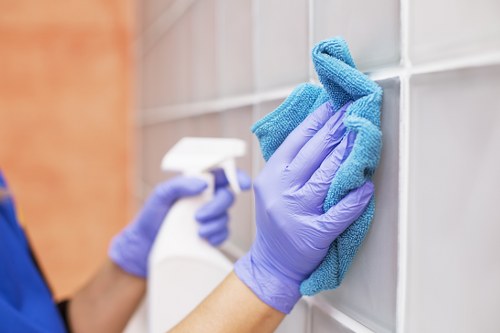
Personal protective equipment (PPE): Appropriate PPE must be issued and used for all cleaning tasks. Typical PPE includes chemical-resistant gloves, eye protection or face shields, aprons, slip-resistant footwear and respiratory protection where aerosolised residues or fumes are likely. PPE usage is enforced during catalytic oven cleaning, degreasing and when using steam cleaners or pressure washers.
Risk Management and Safe Systems
 Risk assessments and control measures: Prior to starting work, a site-specific risk assessment must be completed to identify hazards such as residual heat, hot oil, electrical isolation needs, trip hazards and vulnerable occupants. Control measures include isolating electrical and gas supplies as necessary, using drip trays, setting exclusion zones, and ensuring adequate ventilation to minimise inhalation risks during solvent-based or alkaline cleaning.
Chemical safety and waste: All cleaning chemicals are to be used in accordance with manufacturer instructions and stored safely. Operatives must be trained in safe dilution, spill response and safe disposal of residues and rinse water. Where hazardous residues are present, cleaners will follow internal protocols for containment and removal to protect customers and the environment while ensuring compliance with relevant waste-handling principles.
![A woman with short dark hair and a friendly expression is standing in a brightly lit kitchen, wearing a light grey long-sleeve top and yellow rubber cleaning gloves. She is holding a clear spray bottle filled with blue cleaning solution in her right hand, pointing it slightly upwards, and a yellow cleaning cloth in her left hand. The kitchen surface visible behind her is clean, with a polished wooden countertop and modern appliances, suggesting a well-maintained and hygienic space. The background features blurred, colourful kitchen elements and natural light, indicating a welcoming and tidy environment. This image conveys professional cleaning services that focus on maintaining high standards of cleanliness and safety in residential settings, aligning with local cleaning service expertise in the postcode area relevant to Oven Cleaning Services’ coverage, including [TOWN] or nearby locations. The visual emphasizes the importance of proper cleaning tools and a clean, organised kitchen area, supported by trusted local cleaning providers.](/pub/_photos/cleaning/f1432299144.jpg) Emergency procedures and incident reporting: Clear emergency procedures must be in place, including first-aid provision, access to eyewash facilities, and steps for dealing with chemical splashes, burns or inhalation incidents. All incidents, near-misses and property damage are to be reported promptly so that corrective actions and preventive measures can be implemented. Regular drills and reviews ensure preparedness.
Emergency procedures and incident reporting: Clear emergency procedures must be in place, including first-aid provision, access to eyewash facilities, and steps for dealing with chemical splashes, burns or inhalation incidents. All incidents, near-misses and property damage are to be reported promptly so that corrective actions and preventive measures can be implemented. Regular drills and reviews ensure preparedness.
Work at customer premises: Before starting, operatives will conduct a brief site check to identify customer-specific risks such as pets, children, fragile fixtures, or restricted access. Professional oven cleaning technicians will discuss safe working areas with the client, protect surrounding surfaces, and leave the area clean and safe on completion. Where access issues or hazards are identified, work will be postponed until a safe method is agreed.
Equipment and maintenance: Pressure washers, steam cleaners, ladders and electrical tools must be maintained and inspected regularly. Faulty equipment will be withdrawn from service. Safe lifting techniques and team lifts are used for heavy parts such as oven racks or extraction filters. Portable appliance testing and appropriate guards for hot or moving parts reduce mechanical risks during service.
Monitoring and continual improvement: This policy will be reviewed regularly and updated to reflect operational experience, new techniques in oven maintenance and cleaning, and advances in safety equipment. Internal audits and worker feedback help identify areas for improvement. The organisation is committed to investing in safer products and methods that reduce risk while maintaining high standards of oven hygiene.
Key principles:
- Prevention: Identify hazards and eliminate or reduce risks before work begins.
- Protection: Provide appropriate PPE and engineering controls to shield operatives and occupants.
- Preparedness: Ensure training, emergency response and incident reporting systems are in place.
- Professionalism: Deliver consistent, high-quality oven cleaning and maintenance services with safety central to every job.
By adhering to these principles and the procedures set out above, our oven cleaning teams will deliver safe, effective and compliant services ensuring protection of people, property and the environment.