Insurance and Safety for Oven Cleaning Services
 Public liability insurance is the backbone of any reputable oven cleaning business. Whether you hire a local oven cleaning service or appoint professional oven cleaners for commercial or domestic oven cleaning, having adequate insurance cover protects both the customer and the company. Our policy framework for oven cleaning services acknowledges the specific risks of heat, grease, and chemicals that are inherent in oven maintenance and repair work.
The policy for our oven cleaning operations covers accidental damage to customer property, accidental injury to third parties, and legal costs that can arise from unexpected incidents. For a specialist oven cleaning company, public liability limits are set to industry standards and reviewed annually. This ensures that any claims arising from stove repairs, deep cleans, or grease removal are handled efficiently and transparently.
 Key elements of our public liability package include:
- Third-party injury coverage for kitchen occupants and visitors during an oven clean.
- Property damage protection for delicate cabinetry, tiled surfaces, and appliances.
- Legal defence costs and settlement funds to manage claims without disrupting service delivery.
Staff Training and Competency
All oven cleaning teams must undergo comprehensive training before entering customer premises. Our training curriculum for an oven cleaning service includes safe chemical handling, temperature awareness, appliance-specific cleaning techniques, and customer communication. Trainers emphasize practical competency and knowledge of appliance manuals so that each professional oven cleaner delivers consistent, safe results.Training is a mix of classroom tuition and hands-on sessions. New technicians complete shadowing shifts with experienced operatives, followed by competency assessments. Refresher courses are scheduled regularly to cover advances in cleaning chemistry, updated safety regulations, and new types of ovens???ranging from domestic oven cleaning to large-scale commercial oven cleaning systems.
![A person wearing a blue t-shirt and bright yellow cleaning gloves is cleaning a smooth, polished kitchen countertop with a light blue cloth. The surface appears to be made of granite or quartz, featuring a speckled pattern in neutral beige and grey tones. The clean and shiny surface reflects ambient light, indicating thorough cleaning. In the background, part of a kitchen with white cabinetry and a stainless steel sink is visible, though slightly out of focus. The scene is well-lit, possibly by natural light coming through nearby windows, contributing to a bright and fresh atmosphere typical of residential kitchens in the UK, such as in the town of [TOWN] or around postcode [POSTCODE]. This image illustrates detailed cleaning activity aligned with professional cleaning services, like those offered by Oven Cleaning Services, emphasizing attention to surface hygiene and meticulous care in domestic environments. The focus on the countertop and cleaning cloth highlights the importance of maintaining spotless surfaces in kitchens to ensure cleanliness and safety in UK homes.](/pub/_photos/cleaning/f1525896896.jpg)
Personal Protective Equipment (PPE)
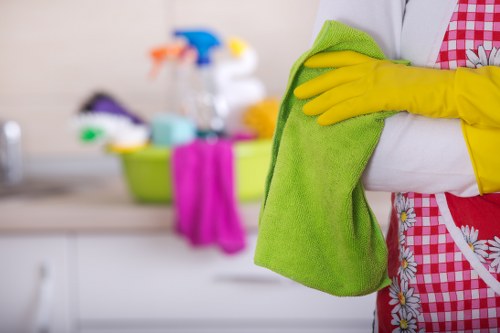
Providing appropriate PPE is mandatory for every oven cleaning task. Standard PPE for oven cleaning tasks includes chemical-resistant gloves, eye protection, flame-retardant overalls where required, and respiratory protection when solvents or aerosols are in use. PPE is issued, maintained, and replaced according to a strict schedule, and staff are trained in correct fitting and use.The correct selection of protective equipment reduces the chance of chemical splashes, cuts from sharp oven parts, and inhalation of fumes. Gloves are selected by chemical compatibility charts, and ear and eye protection are used when working with power tools or high-pressure cleaning equipment. For commercial oven cleaning projects that involve heavy-duty degreasers and pressure washing, additional protective measures such as knee pads and heat-resistant gloves are used.
Safe work practices complement PPE. That means isolating power and gas supplies, venting enclosed spaces, and allowing hot appliances to cool before work begins. Technicians follow protocols for safe removal and disposal of used cleaning materials and filters, and they maintain tidy work zones to prevent slips and trips???common causes of accidents during oven maintenance.
Risk Assessment Process
Before any oven clean, a formal risk assessment is performed. The process evaluates the appliance condition, surrounding environment, access constraints, potential hazards, and the presence of vulnerable occupants such as children or the elderly. This proactive appraisal guides the choice of methods???whether a light domestic oven clean or a deep commercial oven clean???and determines additional controls needed to keep everyone safe.Risk assessments are documented and stored with the job record. The assessment identifies hazards, estimates the likelihood and severity of potential incidents, and prescribes control measures. Typical controls include isolating utilities, using spill trays to protect work surfaces, limiting chemical concentrations, and scheduling work at less disruptive times to reduce business impact for commercial clients.
 Emergency procedures and incident reporting are integral parts of our safety system. Every operative carries access to incident report forms and knows the escalation path for medical emergencies, chemical exposures, or significant property damage. In the unlikely event of an incident, the response is prompt, documented, and reviewed to prevent recurrence.
![Close-up of a person’s hands with blackened, sooty dirt covering the palms and fingers, held in front of their lap which is clad in blue denim jeans. The person appears to be wearing a dark shirt, with their arms slightly bent. The background is blurred, suggesting an indoor setting related to cleaning or manual work. The image emphasizes the contrast between the dirty hands and the lighter denim, highlighting the need for thorough cleaning services to restore cleanliness and hygiene in residential or commercial kitchens or other areas. This visual detail supports professional cleaning offerings, such as those provided by Oven Cleaning Services in the UK, especially around the London area, including postcode districts near [POSTCODE] in [TOWN], where intensive cleaning of appliances and surfaces may be necessary.](/pub/_photos/cleaning/thecleaningsecretswelearntfromgrandma01.jpg) In summary, a safe and insured oven cleaning operation depends on integrated systems: robust public liability insurance, rigorous staff training, consistent provision and use of PPE, and a formal risk assessment process. These measures ensure that whether the task is a single domestic oven clean or a scheduled commercial oven cleaning contract, the work is performed professionally, responsibly, and with respect for the customer???s property and wellbeing. Our commitment to safety is not optional???it is central to every oven cleaning assignment.
In summary, a safe and insured oven cleaning operation depends on integrated systems: robust public liability insurance, rigorous staff training, consistent provision and use of PPE, and a formal risk assessment process. These measures ensure that whether the task is a single domestic oven clean or a scheduled commercial oven cleaning contract, the work is performed professionally, responsibly, and with respect for the customer???s property and wellbeing. Our commitment to safety is not optional???it is central to every oven cleaning assignment.